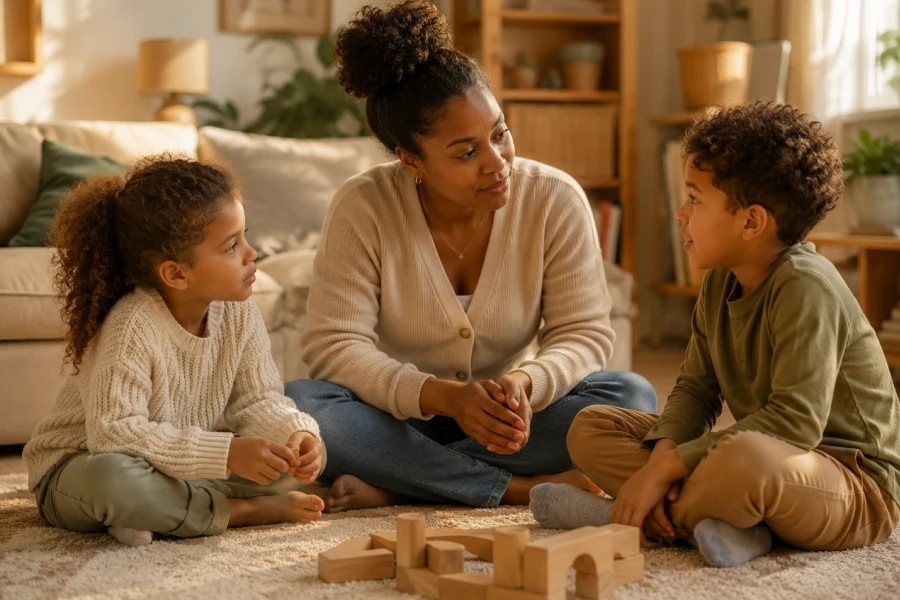
Every parent knows the sound of another argument beginning before breakfast. peaceful sibling conflict does not mean children suddenly agree about everything. It means the home has a calmer rhythm when disagreement appears. Parents stop rushing into every shout as the automatic judge. Children learn that frustration can become conversation, repair, and better choices. This shift matters because sibling tension often hides unmet needs. One child wants space. Another wants attention. Someone feels ignored. A thoughtful plan helps parents respond before the same fight repeats all day.
Sibling arguments feel louder when parents treat every moment as a crisis. A calmer response teaches children that big feelings can move through the room safely. Instead of asking who started it, parents can ask what each child needed. That question changes the tone immediately. It lowers defensiveness and invites problem solving. Families using sibling conflict resolution create a shared language for hard moments. Children begin recognizing patterns faster. Parents feel less trapped between loyalty and discipline. The house does not become silent, but it becomes steadier.
Most sibling battles do not start with the final shout. They begin with small signals. A toy is grabbed. A joke lands badly. A younger child interrupts a private moment. An older child feels responsible for everything. When parents notice the early pattern, they can guide without taking over. This approach respects each child’s dignity. It also prevents punishment from becoming the only tool. Small pauses help everyone name what is happening. Once children feel seen, they can accept coaching more easily.
Children need practice with jealousy, disappointment, fairness, and repair. Those skills rarely grow from lectures alone. They grow when parents model calm words during real tension. A simple phrase can help: pause, breathe, explain, listen, choose. Visual reminders also help children remember steps when emotions run high. Many families use peaceful parenting tools to make that process visible. Children do better when expectations are concrete. They need fewer warnings when they understand the routine. Over time, repair becomes less awkward and more natural.
Parents often feel pushed into courtroom mode. One child cries first, so the other child looks guilty. One child speaks better, so the quieter child seems less convincing. Peaceful homes avoid quick verdicts whenever safety allows. A parent can describe what happened without assigning blame. This gives both children room to explain. It also teaches accountability without shame. The goal is not equal fault. The goal is honest understanding. When children feel the process is fair, they participate with less resistance.
Useful language stays short because angry children cannot process speeches. Try saying, I will help when voices are lower. Try saying, both of you matter here. Try saying, we solve this without grabbing or hurting. These phrases keep authority warm and clear. They also give children something repeatable. A calm parenting plan makes those words easier to remember. Parents do not need perfect patience. They need reliable steps. Children respond best when the same structure appears again tomorrow.
Families build trust through repetition. One peaceful response will not erase years of rivalry. However, repeated calm moments teach children that conflict can end differently. Parents can review the day briefly at bedtime. They can praise repairs more than victories. They can notice when a child waited, shared, apologized, or walked away. This helps children see progress. A home shaped by family harmony routine becomes less reactive. The fights may still happen, but they stop controlling the whole day.

Leave a comment