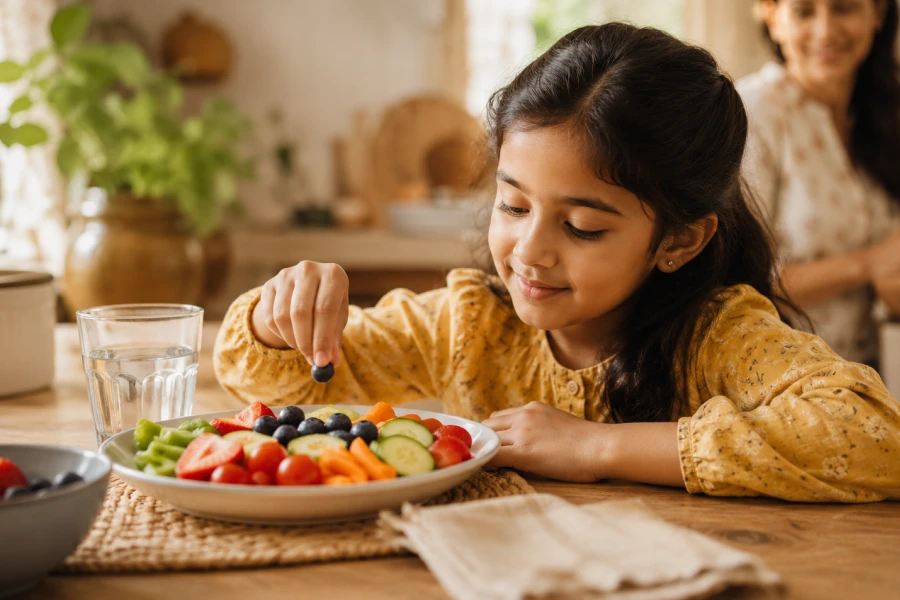
Parents want meals to nourish their children, not turn into nightly negotiations. healthy eating habits for kids develop slowly through trust, exposure, and routine. Pressure can make food feel like a contest. Bribes can make vegetables seem suspicious. Shame can make picky eating more intense. A calmer approach gives children room to explore food without fear. Parents still lead the routine, but they do not need to control every bite. Small choices become meaningful. Over time, children learn that mealtime can feel predictable, positive, and safe.
Children often need many exposures before a new food feels familiar. That does not mean parents are failing. It means the child’s senses are learning. Color, smell, texture, temperature, and shape all matter. A food that seems simple to adults may feel surprising to a child. Families using picky eater support can separate exploration from pressure. A child may touch, smell, lick, or taste before eating more. Each step counts. Patience protects curiosity. Curiosity eventually opens the door to variety.
A predictable rhythm helps children relax before food even appears. Meals work better when the table has fewer surprises. Try keeping times consistent when possible. Offer one familiar food alongside newer options. Keep conversation light. Avoid turning every meal into a nutrition lesson. Children learn from atmosphere as much as ingredients. A pleasant table invites participation. When meals feel emotionally safe, children take more reasonable risks. This is where long-term eating confidence begins.
Food battles often begin when parents own both roles. They choose what appears and then try to control what disappears. A healthier split gives parents responsibility for what, when, and where food is offered. Children handle whether and how much they eat from what is available. This structure lowers conflict quickly. A positive food routine helps families repeat that boundary. Parents stop begging. Children stop performing. Everyone gets more space to listen to hunger, fullness, and comfort.
Big food transformations rarely happen in one week. Small wins build a stronger foundation. A child tries a new dip. Another child places cucumber on the plate. Someone helps wash berries. A hesitant eater takes one bite without drama. Parents can notice these moments without overpraising them. Simple acknowledgment works best. Say, you tried something new today. Say, you listened to your body. Families using child nutrition habits tools make progress visible without making it tense.
Parents often know what they want meals to feel like, but planning still gets exhausting. Smart prompts can help generate ideas around budget, allergies, preferences, and time. They can suggest lunch combinations, snack rotations, or gentle food exploration games. The goal is not outsourcing parenting. The goal is reducing mental load. Helpful AI food tools give parents fresh options when creativity runs low. Children benefit when adults feel less depleted. A calmer parent often creates a calmer table.
Lasting habits come from repeated experiences, not perfect menus. Children remember whether food felt safe, flexible, and connected. They notice when adults enjoy balanced meals without moralizing every choice. They also learn from helping with simple preparation. Washing fruit, stirring yogurt, or choosing a vegetable builds ownership. A family practicing healthy kids meals routines can create progress without pressure. The best habits feel normal. They become part of the family’s everyday rhythm.



Leave a comment